
Our Mission
The Acid Maltase Deficiency Association’s driving force lies in its efforts to advance research, improve care, and ensure early diagnosis for individuals and families affected by Pompe diseaseA rare genetic disease in which the body cannot properly break down glycogen, leading to buildup that damages muscles and can affect breathing and, in some cases, the heart.. Founded by the House family and guided by individuals living with Pompe disease, AMDA works through deep collaboration with global experts, industry, and policymakers to translate science into informed, compassionate support for the Pompe disease community.
What is Pompe disease?
Research
Webinars
News
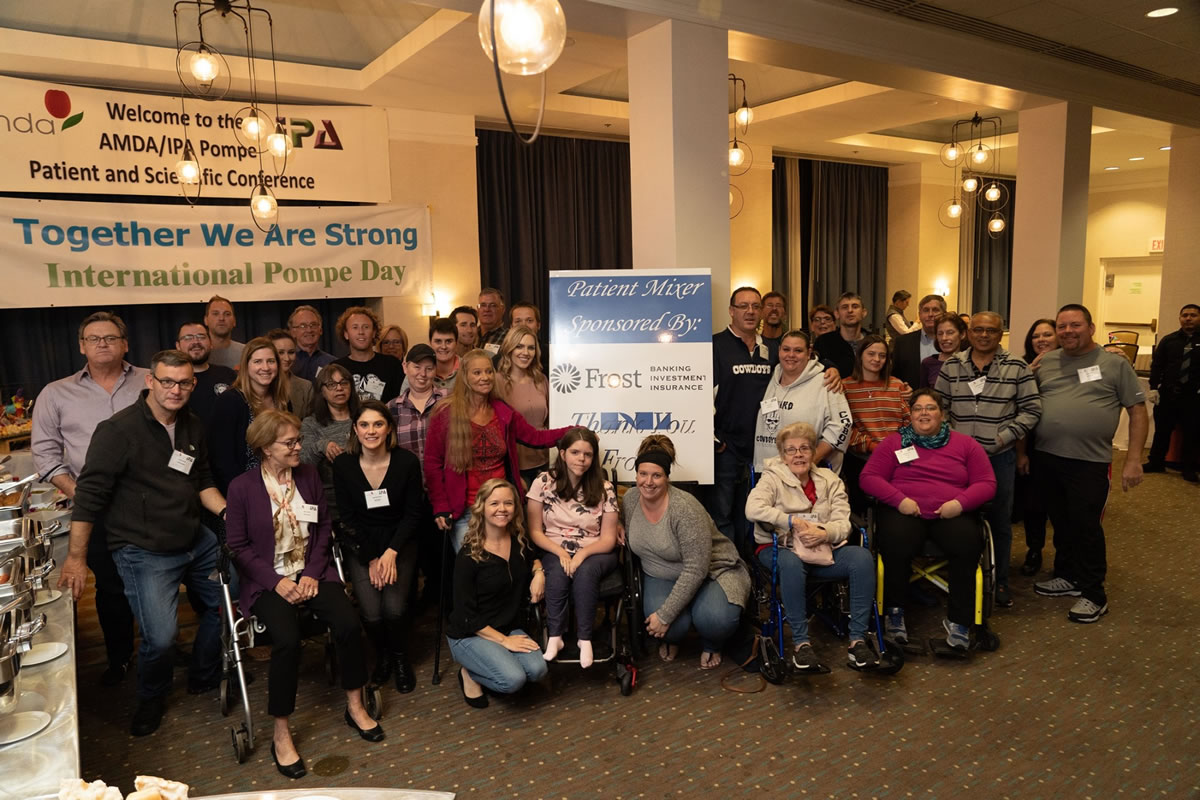
Conferences
Recent News
2026-2027 AMDA Research Grant Call for Letters of Intent
Call for Letters of IntentThe Acid...
Reports of Nexviazyme Shipment Delays
August 7, 2026Pompe Alliance,...
A Heartfelt Thank You to the Krueger Family
The Acid Maltase Deficiency...
Honoring Advocacy: Celebrating Tiffany House and the RareVoice Awards
This week is Rare Disease Week, with...
Tiffany House Receives RareVoice Award for State Advocacy
We are honored to share this moment...
2026 PCMA Pull for Pompe Fundraiser
The AMDA is excited to announce that...
Setting the Record Straight
The truth of Pompe disease
The popular narrative around Pompe treatment has often overlooked the scientists and researchers who truly made it possible. Here are two essential voices on the real history.
Editorial
Pompe in the News: What Happened to the Truth?
Tiffany House — AMDA President (2011 – 2025)
Written on Rare Disease Day 2017, Tiffany’s editorial addresses how media coverage repeatedly misrepresented the origins of MyozymeA form of enzyme replacement therapy used to treat Pompe disease by providing a lab-made version of the GAA enzyme./Lumizyme and honors the research teams at Rotterdam and Duke University, whose decades of work made enzymeA protein that helps the body carry out chemical reactions. replacement therapy possible.
Blog
The Pompe Story
Dr. Kevin O’Donnell — IPA founding member
Dr. O’Donnell was there. A founding member of the International Pompe Association, he witnessed firsthand the triumphs and setbacks that shaped the community. His blog is a first-person account of what actually happened and a vital resource for anyone who wants the full picture.
Recent Blog Posts
Working With a Disability: Programs That Can Help
October — a month that many associate...
Vaccines and Pompe Disease: What to Know This Immunization Awareness Month
Every August, National Immunization...
The ADA at 36: What the Law Did, and What Only We Can Do
This month marks the 36th anniversary...
Move How You Can, Rest All You Need
Hey, all! Lucas Garrett, here. As we...
New Year’s Resolutions and Hobbies
For many, the end of the calendar year...
Burnout, Creativity, and Rest
For me, music can be one of the best...
Upcoming
Webinar

Biomarkers of Central and Musculoskeletal Symptoms in Infantile- and Late-Onset Pompe Disease
Webinar DetailsTitle: BiomarkersA measurable sign in the body that helps track disease progression or treatment response. of Central and Musculoskeletal Symptoms in Infantile- and Late-Onset Pompe DiseaseA form of Pompe disease that begins after infancy and usually progresses more slowly. Date: Tuesday, November 17, 2026 Time: 1 p.m. CT / 2 p.m. ET Speakers:Jaymin Upadhyay, PhDRaquel van Gool, PhD Webinar Overview:In this presentation, an...
Upcoming Talking With Your Pompe Peeps Session

Check Back Soon for Upcoming Talking With Your Pompe Peep Sessions
We don’t have a webinar scheduled at the moment, but more exciting sessions are on the way! Check back soon for details, or sign up for our newsletter to be notified when new webinars are announced.

Tiffany Laurel House
January 22, 1983 – May 25, 2025
President, Acid Maltase Deficiency Association – Chair, International Pompe Association
“She was a beacon of grace, poise, and determination until the very end.”
Get Involved
Your generous contribution will go a long way into improving the quality of life of Pompe Disease Patients worldwide. Donations go towards Pompe Disease Research.
Acid Maltase Deficiency Association
For the AMDA videos: All Rights reserved. No part of the AMDA's videos may be reproduced or transmitted in any form or by any means, electronic or mechanical, without the written permission of the copyright holder.
If you are interested in learning more about Pompe Disease and would like to make a contribution in support of necessary research, please contact us at:

info@amda-pompe.org
THE AMDA
PO Box 700248
San Antonio, Texas 78270 USA